Leaf 18
Prada Frames 2026: The Crisis of Images
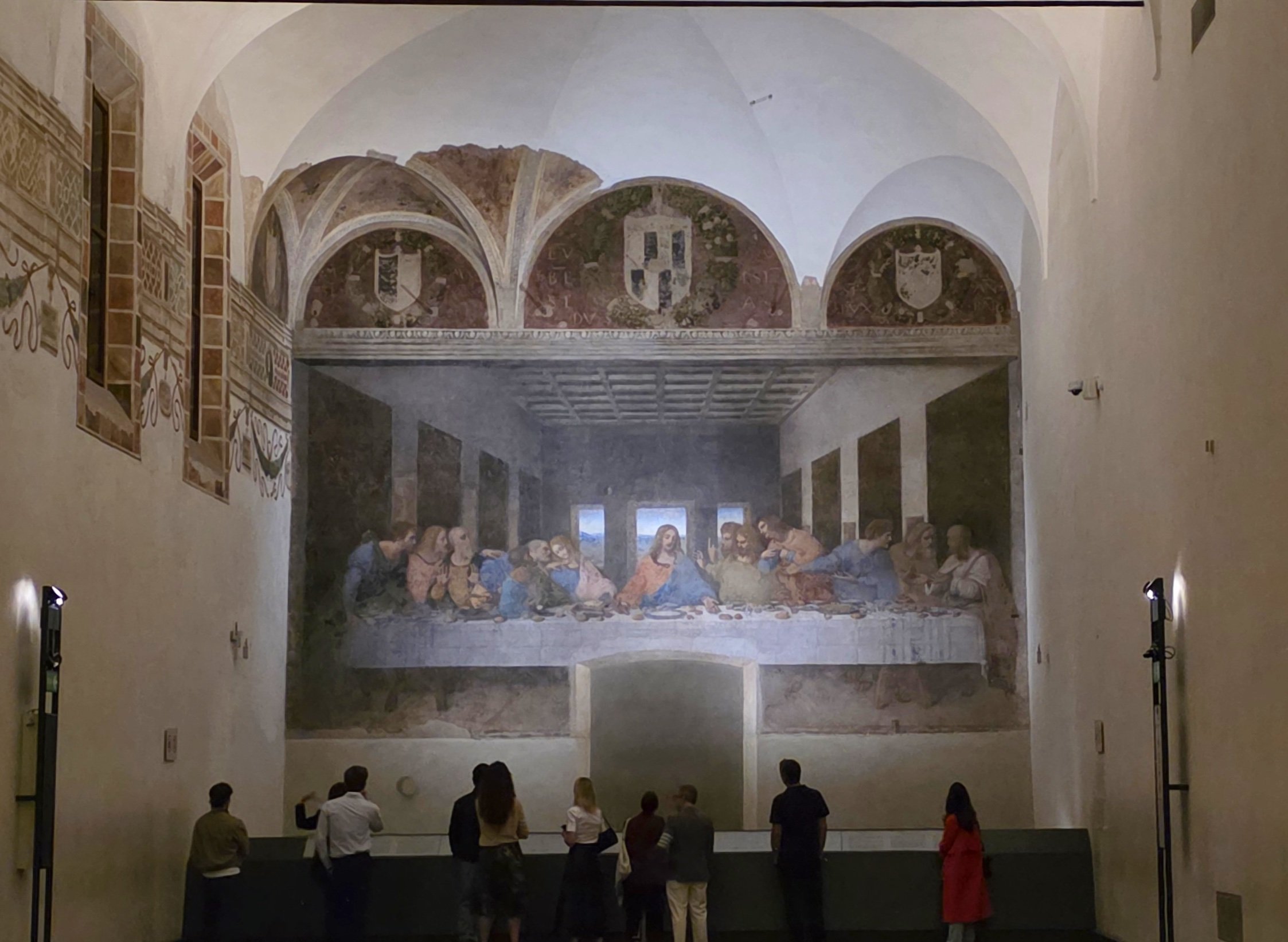
Photo Credit: Rodger Horton
One event not mentioned in this spring's sprightly, fashion-laden film, The Devil Wears Prada 2, is that the intellectual founder of the famous Italian couture house also funds an important multidisciplinary symposium focusing on timely cultural themes. The blooming parks in mid-April Milan were gloriously breezy and the city sparkled for the fifth installment of this now annual conference. The 2026 topic, "The Crisis of Images," was unpacked by invited speakers from around the globe. Their pithy, site-responsive performances reflected on today's image quandaries while inside an extraordinary — and symbolically apt — historic complex. During its four-day duration, both enthusiasm and troubling artistic, ethical, ecological, and political concerns were voiced regarding mediated matter, transmedia, computer-generated videos, the varieties of new media, and especially the rapid incursions of AI into everything from architecture, film, music, and word.
This year's site was the Church and Dominican Monastery of Santa Maria delle Grazie (1497) — that splendid Lombardian basilica and UNESCO World Heritage Site — enclosing sculpted columns and fountains within secluded grassy cloisters, and famously housing in the Refectory Leonardo's masterpiece of movement in stasis, The Last Supper. I was privileged to view, for the first time and dimly lit in the evening, this much-restored, non-fresco mural experiment by the great Renaissance artist.
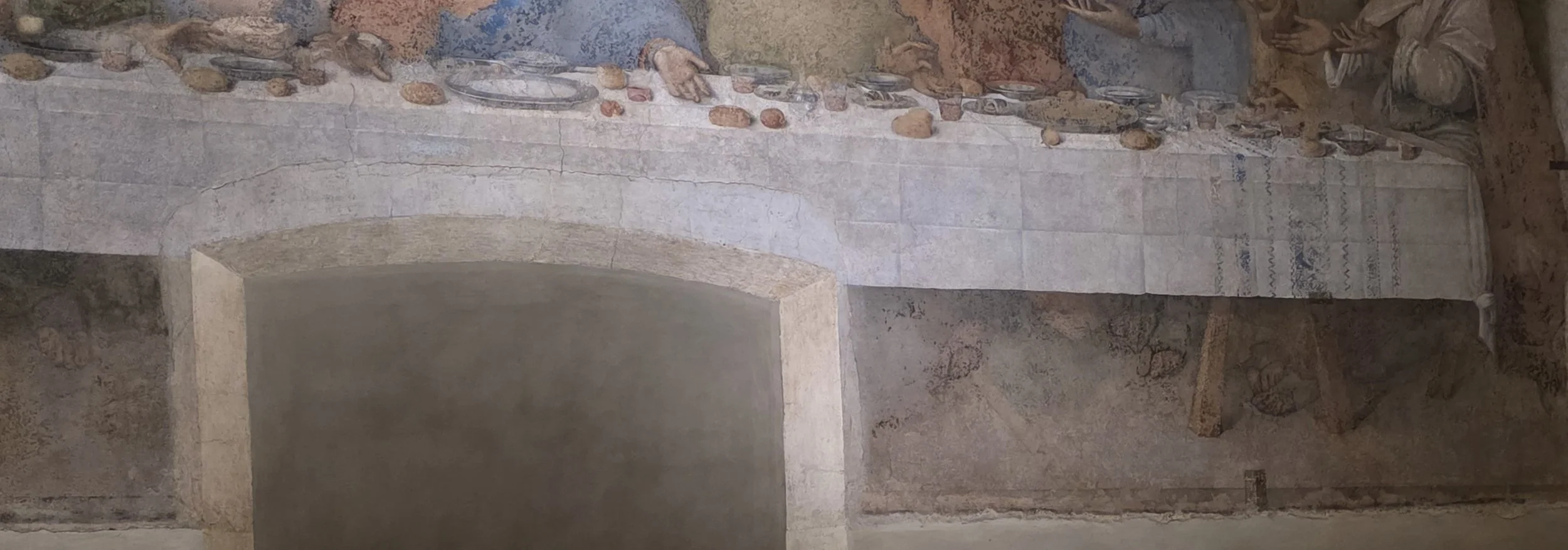
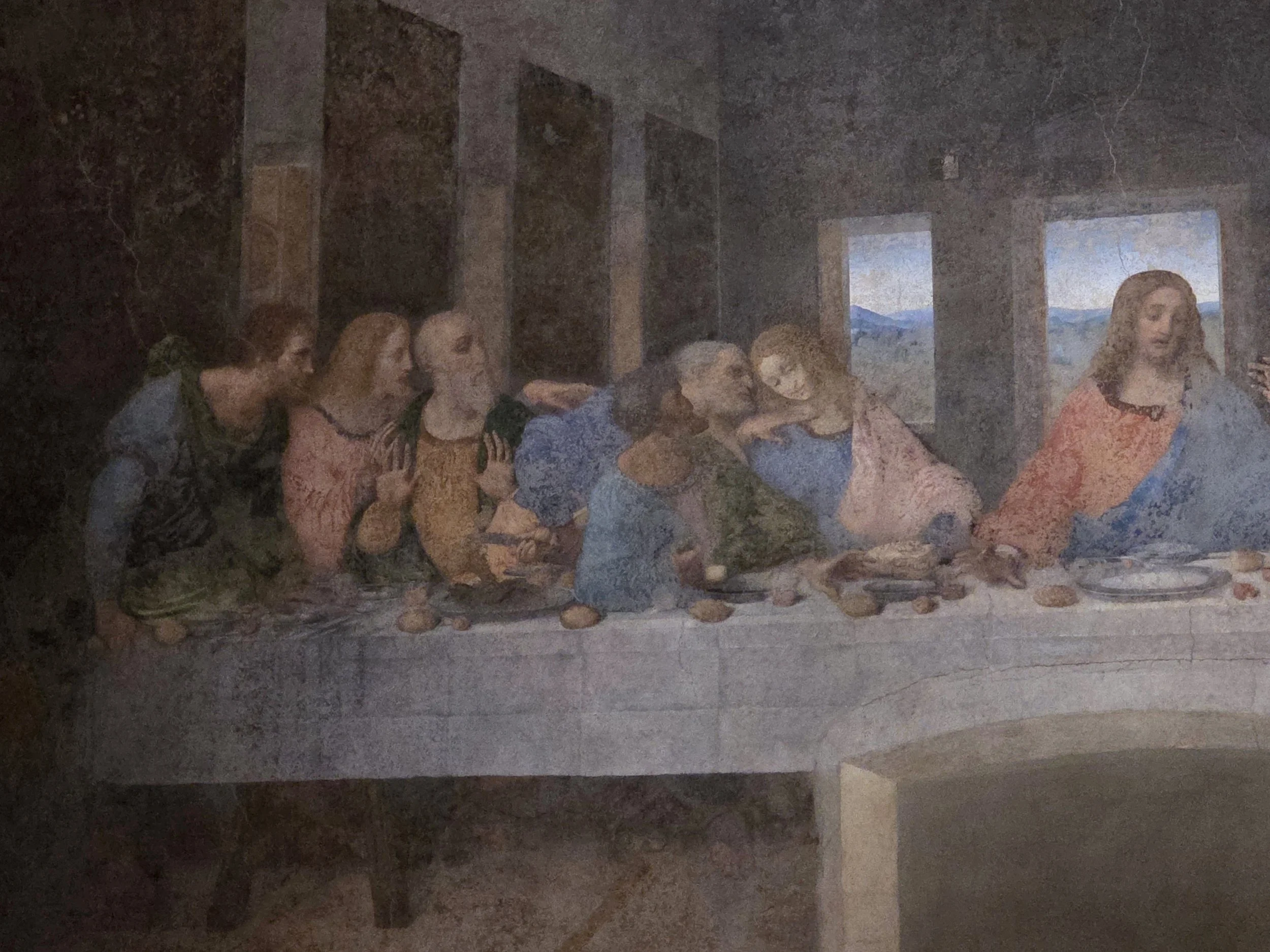
This impossible-to-adequately-describe experience of witnessing such iconic psychological presence took me back to my graduate student days at the Warburg Institute, London. I had gone there from Chicago to study the Early Modern eruption of heightened emotions — the passions — in art with E.H. Gombrich. Only whispers and shadowy glints broke the quiet darkness as my academic past flew by me. How I wished I had been able earlier in my life to stand in front of that primal source of painted sorrow, pain, guilt, doubt, fear, despair, and remorse. In contrast to his contemporary Raphael's soft and graceful portraits, Leonardo presses difficult, burdensome feelings out of his physiognomies and bodies. No wonder his genius for capturing fleeting affect embodied as distinctive gesture was taught as a communication ideal in all seventeenth- and eighteenth-century European art academies. For contemporary viewers, not only faces and glances — wracked with conflicting feelings — but agonizingly tense, cramping, or shamefully twisting feet (visible beneath the tablecloth) and straining, protesting, or reaching hands (seen above) still mutely actualize the conflicted minds of Christ's followers the night before his crucifixion. The anatomical facticity of Leonardo's figures, paradoxically, reveals the loving, cowardly, or tormented soul.
In closing, pondering The Last Supper returns us to the logistics and operative effects of the setting on the substantial substance and atmospherics of this four-day symposium. It was held in Renaissance architect Donato Bramante's elegantly designed Old Sacristy. While the side walls of this long rectangular room were lined with delicate fifteenth-century paintings and exquisite intarsia work mimicking trompe l'oeil window frames, the gamboling angel/putti-frescoed apse held the small stage.
There, each morning and afternoon event was introduced by a solo violinist or harpist creating an acoustically alive transition from the busy urban streets outside to this becalmed interior, readying us to hear the lectures and conversations. The design critic and eloquent advocate Alice Rawsthorn admirably contextualized each session. The attentive audience of about two hundred was composed of residents, visitors from the concurrent International Salone del Mobile Milano also in town, professionals of all sorts, and interested tourists.
This cultivated and cultured setting contributed in an integrative way to the short talks and performances (too numerous to cite) on uncovering new meaning in photography as sources of power; images, algorithms, and perception; imaging, architecture, and site-specific projects; and design as an attitude and design futures. Additionally, visual artists, composers, performers, and public readings by the speakers from work significant to the symposium's themes prompted myriad discussions and carved out new areas to explore. I left overwhelmed, knowing Milan to be an incredibly rich, complex city to which I desired to return. Together with Santa Maria delle Grazie — one of its enduring crown jewels — it constituted a sort of collaborative, sensuous, and intellectual theater, upheaved for a magical time by Prada Frames 2026, with its polyphonic program felicitously organized, so clear and architectural in design.