Leaf 19
Project: On the Road in West West Texas
Entering Big Bend, Texas, or, One Night with You:
Alpine’s Stunning Earth and Sky Art
Glorious Big Bend Ranch State Park and Big Bend National Park are primeval and kinetic examples of Nature’s Earth Art. Taking the long view, fissured volcanic rocks with
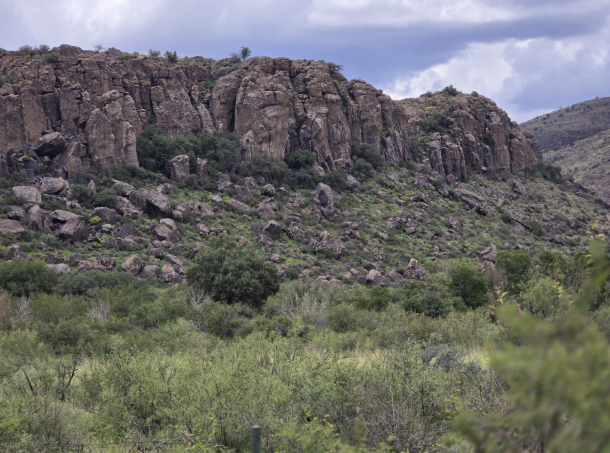
tubular plugs, tabular sheets, and uplifted through vents into odd conical domes
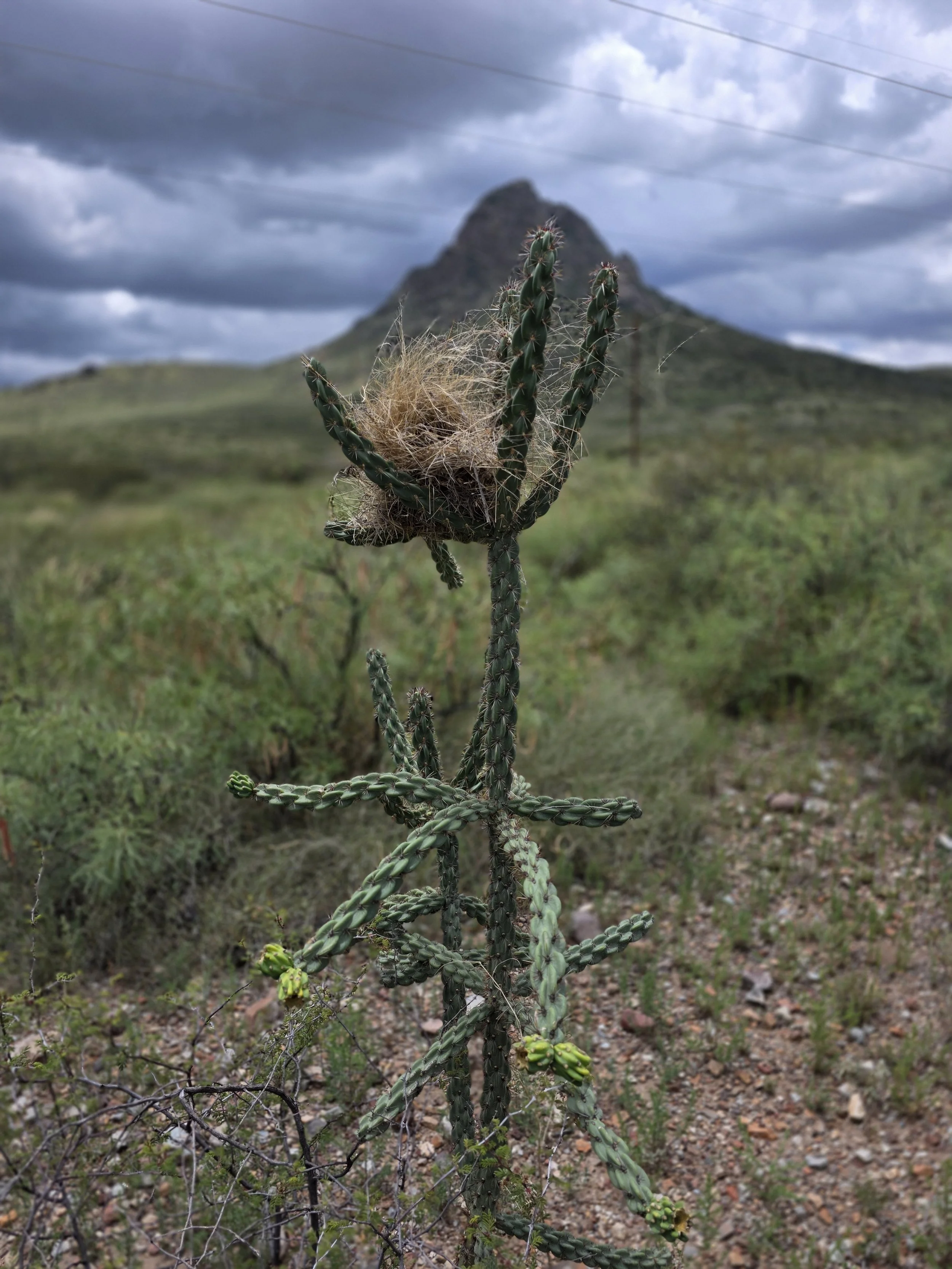
or revealing solidified magma-painted dikes and fracturing fault lines—resulted from eruptions during the Middle Tertiary in this back of back Texas [38.4 million years ago]. These eroded and eroding massive vertical and horizontal grotesques are surrounded by Cretaceous sedimentary strata sliced from the sea floor, guttered red clay, as well as strangely white, leached, and crusty Permian limestone pocked with gaping openings from holes to caves.
Dramatic road cuts, implacably marching alongside the steep and winding inclines, allow visitors to see the formation of the Davis Mountains. This ancient birthing is enacted in the extruded rocks, their mineral inclusions, and jitter-inspiring abysses falling away. The hike or ride through this wilderness thus moves the observer from the physical to the metaphysical: from the material performance of what happens to the continuing growth and whittling away of all substance.
Such wonders are the baffling monuments, the creative media, the persisting ruins or relics of brute first things undergoing continuous transformation. Long before Robert Smithson’s grand-gesture Spiral Jetty [now rising high from Utah’s Great Salt Lake as a delayed critique of Global Warming] or Andy Goldsworthy’s anomalous stream of cloven boulders careening down England’s mossy forest trails, nature crafted its own elemental infrastructure.
But it was between 1933-1939, under Franklin D. Roosevelt’s administration, that this remote terrain was metamorphosed by The New Deal and its accompanying public work and public art projects—among them the park-rich and culture-rich Tri-County area [Brewster, Jeff Davis, and Presidio which edges the Rio Grande].
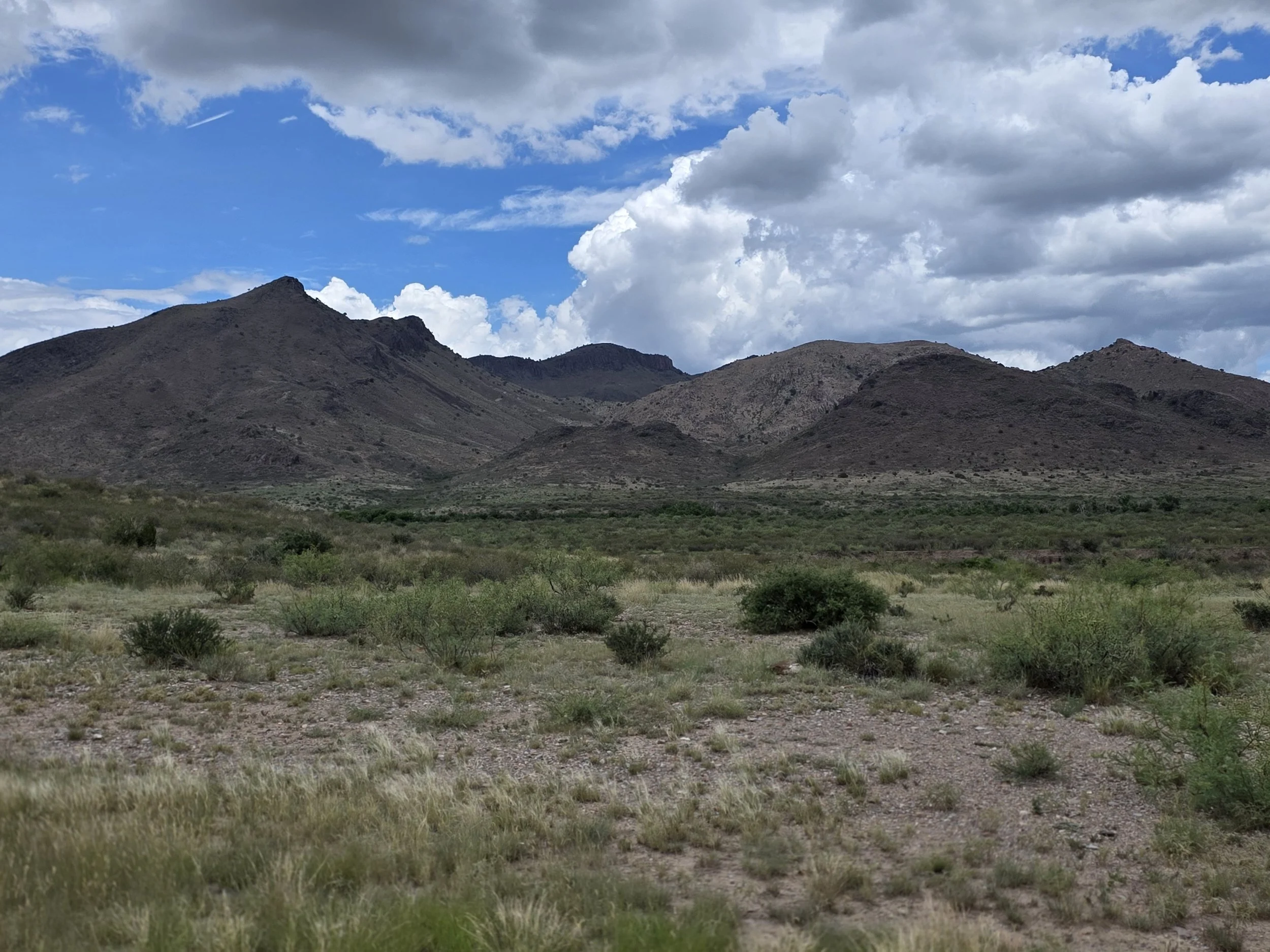
Alpine lies in a basin at the beginning of the Big Bend landmark. Plateaus drop and the range of the Davis Mountains springs from the desert floor, rising in curved ranks one behind the other. They look blue/gray in the early evening haze. Long plateaus, short plateaus, sudden gaps present views of a serrated range.In the morning, it’s high elevation [4475’] offers a cooler, refreshed panorama: basalt cliffs, talus slopes gradually drifting downwards.
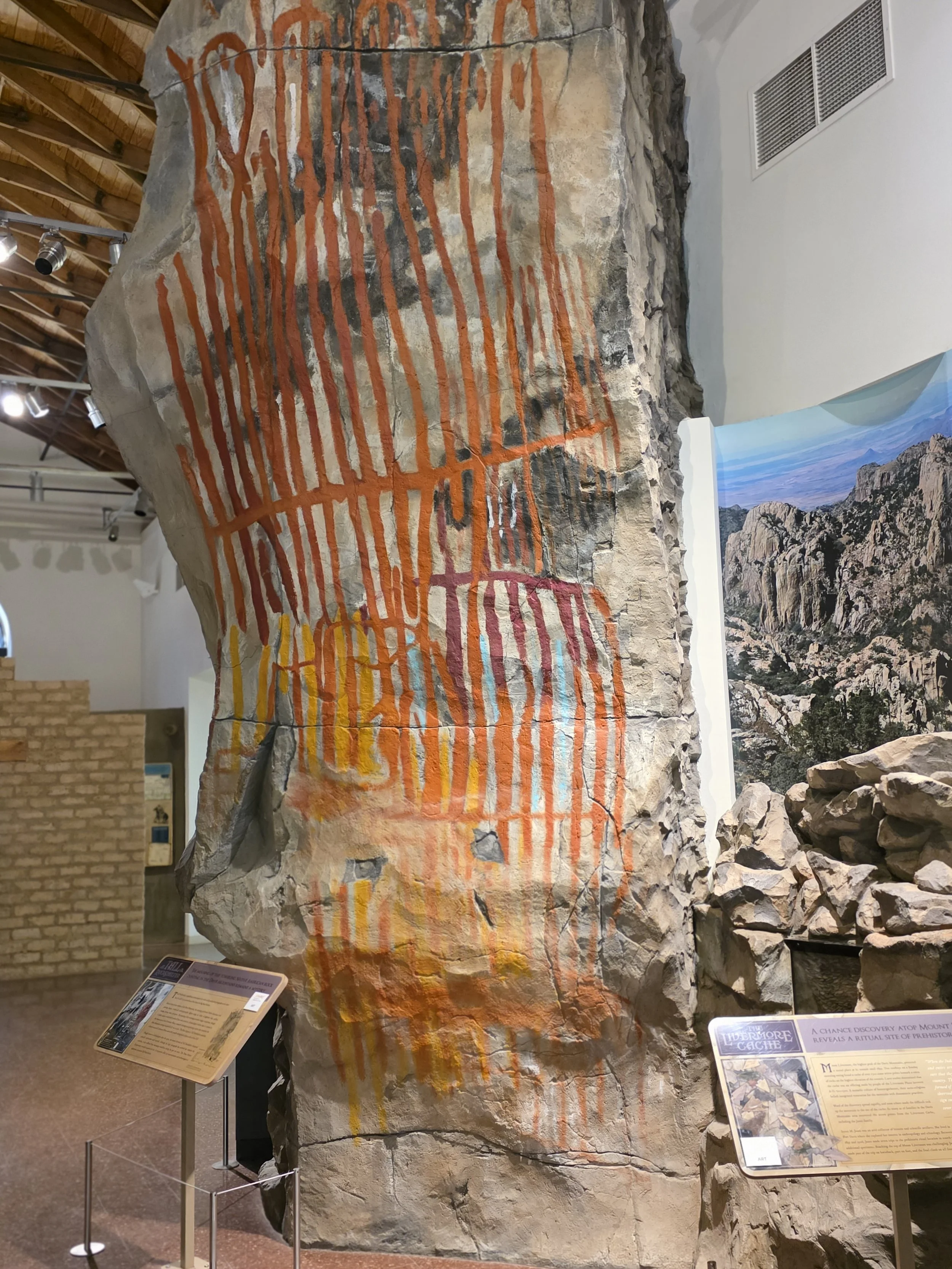
The Museum of the Big Bend draws the visitor to the idyllic and grassy Sul Ross State University Campus on the outskirts of town. There you can experience everything from the otherwise inaccessible petroglyphs adorning the sides of “Miter Peak or the “Haystacks” as well as on the walls of basalt along the memorably -scenic state highway 118, to the life style of the Indigenous cultures inhabiting these mountain vistas. The Museum also hosts “Spark! Places of Innovation”—a Smithsonian exhibition that travels to “innovative rural communities” to explore the “narrative” intersection of land, origin, culture.
Yet, for me, it was the surrounding ridged Earth Art by day and the unpolluted black starscape that made Alpine so memorable. Yes, of course, there is the McDonald Observatory in nearby Fort Davis, Texas, proudly equipped with the Hobby-Eberly Telescope—“the largest in North America.” But I will never forget quietly and silently experiencing a tiny portion of the Greater Big Bend International Dark Sky Reserve [preserved in 2022].
Standing outside in the car park of a small hotel at the edge of Alpine, it felt miraculous to look up at the natural painting unscrolled overhead. It was a shimmering pointilliste vignette of the 15,0000 plus square miles of light-pollution protected nightscape spanning both West Texas and Northern Mexico. The air was cool, a faint breeze blowing, and above me vaulted a mere tiny microcosm of this immense constellation-studded and galaxy-teeming singularity.
No wonder the gods of myth were configured as ensembles of stars and planets, moons and nebulae. The view left me with the feeling that the glimmering stretch of the Milky Way—casting its pale sheen on the desert floor—matches, in its need for the lushness of darkness, the chromatic awakening of the mountains at dawn through the radiance of the sun.